Wall, Floor & Shower Grout Calculator — Surface-Specific Settings
A grout calculator that refuses to treat a shower floor like a kitchen wall. Pick a surface — wall, floor or shower — and the tool pre-fills the tile size, joint width, joint depth, material density and waste margin that surface actually calls for, then runs the joint-volume math in one pass. The main grout calculator is the general-purpose tool; this is the surface-preset layer.
Surface-Preset Planner
Pick a surface, the math pre-fillsSurface preset
Ceramic wall tile
Wall joints stay narrow because the tile is small and the surface sees no foot traffic. Unsanded grout is the only finish smooth enough for 1/16 in joints — sanded grains will not fit and will scratch the polish.
Tile
4-1/4 × 4-1/4 in
@ 1/16 in joints
Density
1.6 kg/L
1/4 in depth
Shopping list
Coverage
1.160
kg/m² · 0.238 lb/ft²
Net
10.8
kg
With +5%
11.3
kg · 24.9 lb
Five steps from surface pick to verified coverage
Every surface on this page runs the same chain — verify, compute, buy, place, check. Work the steps in order; tick them as you go.
Verify the surface
VerifyConfirm the tile is actually the size and thickness the preset assumes; if the bag reads differently, adjust the density in Step 2.
Compute the joint volume
ComputeL/m² = depth × (2 × side × joint + joint²) ÷ (side + joint)² — all in millimetres. Or read it straight off the calculator card.
Apply the surface margin
BuyWall +5%, floor +10%, shower +15%. Multiply the net kilograms by the percentage, then divide by the package size and round up.
Place per surface, not per room
PlaceGrout walls first, let them green-up, then the floor. In a shower, do the wall field first, the curb and pan last so the wet edge never advances into fresh grout.
Verify coverage and clean-up
VerificationAfter the first 2 m², sponge-judge how much powder is left. If you are running short, stop, mix another batch — never thin the grout to stretch it.
Quick tip
Mix only what you can place in 20 minutes — cement grout greens up fast, and a half-set bucket is wasted material.
Backup warning
Before grouting, photograph the tile lot codes. If a colour mismatch surfaces after grouting, the lot trace is your only recourse with the supplier.
Don't thin
Never add extra water to stretch a short batch. Thinned grout loses colour, cures weak and shows efflorescence — mix another batch, don't dilute the last one.
One complete example per surface
The presets above are general. Here is exactly what the math produces for three reference jobs — one wall, one floor, one shower — using the preset values.
Ceramic wall tile
60 ft² of 4-1/4 × 4-1/4 in @ 1/16 in joints
Joint volume
0.725
L/m²
Coverage
1.160
kg/m²
Net weight
6.5
kg · 14.3 lb
+5%
6.8
kg with margin
Buy
2
× 5 lb bag (unsanded)
Floor tile (porcelain or ceramic)
200 ft² of 12 × 12 in @ 1/8 in joints
Joint volume
0.195
L/m²
Coverage
0.322
kg/m²
Net weight
6.0
kg · 13.2 lb
+10%
6.6
kg with margin
Buy
1
× 25 lb bag (sanded)
Shower wall & floor (wet area)
90 ft² of 6 × 6 in @ 1/8 in joints
Joint volume
0.257
L/m²
Coverage
0.436
kg/m²
Net weight
3.6
kg · 8.0 lb
+15%
4.2
kg with margin
Buy
1
× 10 lb bag (or epoxy kit)
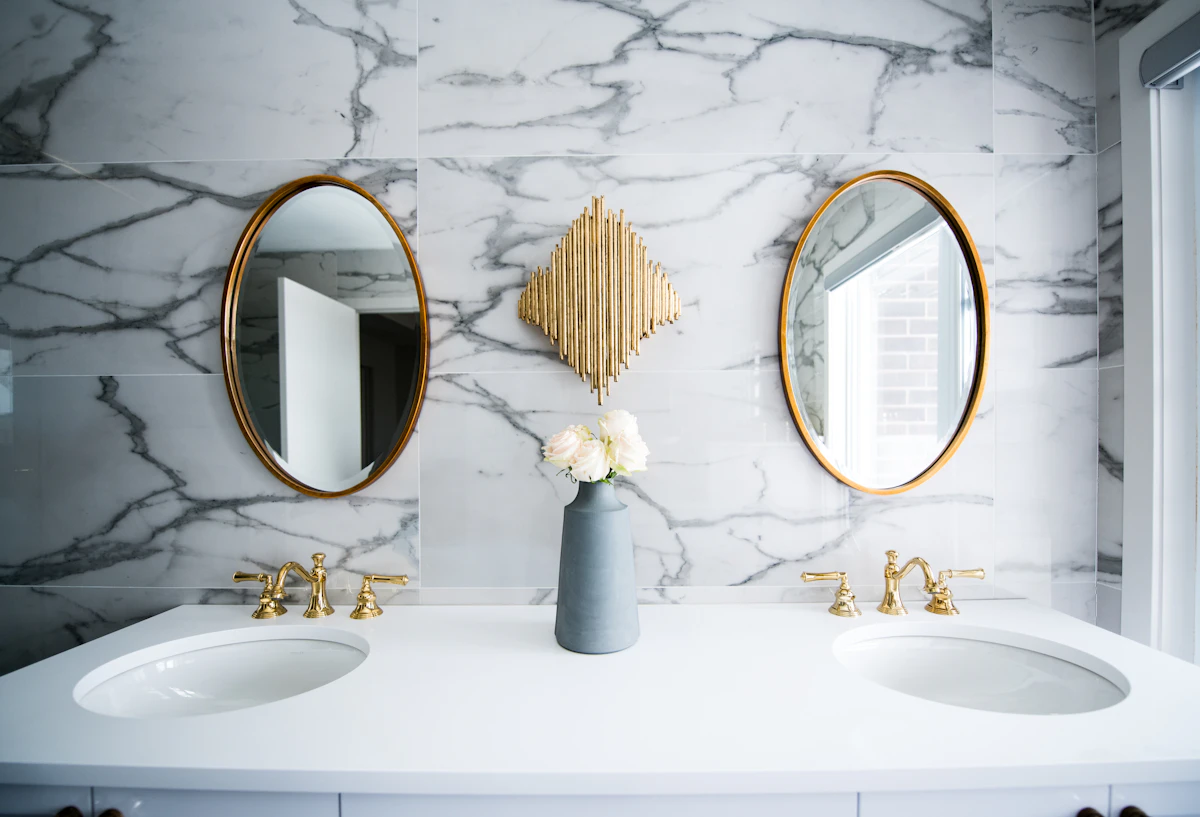 Walls first, floor next, pan last — the order that keeps the wet edge out of fresh groutPhoto: Unsplash
The three presets, side by side
The page in one table: which joint width, which grout type, which density, which margin, and what the coverage comes out to for the anchor tile of each preset.
| Surface | Tile | Joint | Grout type | Density | Margin | Coverage |
|---|---|---|---|---|---|---|
| 🧱 Ceramic wall tile | 4-1/4 × 4-1/4 in | 1/16 in | Unsanded | 1.6 kg/L | +5% | 1.160 kg/m² |
| 🟫 Floor tile (porcelain or ceramic) | 12 × 12 in | 1/8 in | Sanded | 1.65 kg/L | +10% | 0.322 kg/m² |
| 🚿 Shower wall & floor (wet area) | 6 × 6 in | 1/8 in | Sanded | 1.7 kg/L | +15% | 0.436 kg/m² |
Surface-specific grout FAQ
What is the difference between a wall grout calculator and a floor grout calculator?
Nothing in the math and everything in the presets. A wall grout calculator runs the same joint-volume formula, but it assumes narrow joints (1/16 in), unsanded grout (because sanded grains will not fit a 1/16 in gap), shallow tile (1/4 in) and a slim 5% waste margin. A floor grout calculator opens the joint to 1/8 or 1/4 in, switches to sanded grout for abrasion resistance, uses the full tile thickness as depth and carries a 10% margin because foot traffic means more reworking during clean-up. The formula is identical; the defaults are not.
How does a ceramic floor tile grout calculator differ from porcelain?
For coverage math, almost not at all — both sit in the 1.6–1.7 kg/L density band and use the same joint geometry. What changes is edge finish. Porcelain tiles are rectified (precise edges that allow 1/16 in joints); many ceramic floor tiles are cushion-edged (the factory bevel means the joint you see is wider than the gap you cut). A ceramic tile grout calculator must assume the visible joint width, which often runs 1/4 in or more. A rectified porcelain floor at 1/8 in joints uses about half the grout of a cushioned ceramic floor at 1/4 in.
Why does a shower tile grout calculator add 15%?
Shower grouting loses material to water — every sponge rinse carries a little grout off the wall, and wet-area clean-up requires more passes than a dry floor. The 15% margin is the industry rule-of-thumb that covers sponge dilution, the slurry that washes into the pan, and the small re-touch batches you mix after the main pass. It also covers the one surface a flat calculator misses: you measure shower walls, floor and curb separately, and each has its own tile size and joint depth. The shower preset uses a representative 6 × 6 in wall tile, but real shower work often has three geometries in one enclosure.
Is a ceramic tile grout calculator different from a generic grout calculator?
Only in the defaults. A ceramic tile grout calculator search usually wants two things the generic calculator leaves to the user: unsanded vs sanded (narrow ceramic joints need unsanded; wide floor joints need sanded), and a density assumption (ceramic grouts cluster around 1.6 kg/L, while epoxy runs 1.7 kg/L). Once those are set, the calculation is the same volume-to-weight chain. The main grout calculator on this site lets you override density; the surface presets on this page pre-fill the overrides for you.
How do I grout a 2 × 2 in mosaic shower floor?
Treat it as its own surface, not part of the wall calculation. A 2 × 2 in mosaic at 1/8 in joints and 1/4 in depth holds 0.73 L/m² of joint — about 3.7× the volume of a 12 × 12 in floor at the same joint width. For a 30 ft² shower pan that is roughly 2.0 L of joint, which at 1.7 kg/L is 3.4 kg of powder before the 15% wet-area margin — so budget closer to 4 kg (9 lb). Always run mosaic separately from the wall field; mixing them into one calculation undercounts the floor badly.
When does a wall grout calculator switch to sanded grout?
At 1/8 in joint width. Unsanded grout has no silica grains — it is portland cement and pigments, smooth enough to tool into 1/16 in joints without scratching polish. Once the joint opens to 1/8 in or wider, unsanded grout shrinks and cracks because there is no aggregate to resist the cure shrinkage; sanded grout adds silica that both fills volume and controls shrinkage. Wall presets on this page sit at 1/16 in and use unsanded; floor and shower presets sit at 1/8 in and use sanded. If your wall joint is actually 1/8 in (rectified porcelain), switch to sanded even on a vertical.
Do I grout a wall the same way I grout a floor?
The application is different, the math is not. On a floor you push grout diagonally across the joints with a rubber float, wait for it to firm up, then wipe with a damp sponge in circular passes. On a wall the sequence is the same, but gravity is against you — the grout sags in wide vertical joints before it sets, so you tool it twice (once to fill, once to compact after a 10-minute wait), and you never grout a wall in direct sun or warm breeze because the surface dries before the joint does. In a shower, wall field first, pan and curb last — the wet edge should never advance into fresh grout.
Should a shower tile grout calculator use epoxy?
For wet areas, epoxy is the premium card — true 2-part epoxy is stainproof and rated for permanent immersion, which makes it the material of choice for a steam shower or a tub surround that sees daily soaking. But epoxy costs roughly 4× a cement grout per square foot and loses none of its working-time disadvantage on a wall. For a standard residential shower, a polymer-modified cement grout with a 15% margin is the usual answer; reserve epoxy for submerged tile (pan floor) or commercial wet rooms. The epoxy grout calculator page walks the full kit math if you go that route.
Related surface paths
The main grout calculator is the general tool — it leaves every preset to you. For epoxy on a shower floor, the epoxy grout calculator walks the kit math. For the full materials list on a floor job, tile adhesive and grout sizes thinset and grout in a single takeoff.
Related Grout Calculators
Mapei Grout Calculator
Free Mapei grout calculator for Ultracolor Plus FA, Flexcolo...
Laticrete Grout Calculator
Free Laticrete grout calculator for Spectralock PRO, Permaco...
TEC Grout Calculator
Free TEC grout calculator for Power Grout, AccuColor and Ski...
Custom Building Products Grout Calculator
Free custom building products grout calculator for Polyblend...
Bostik Grout Calculator
Free Bostik grout calculator for TruColor premixed urethane,...
ARDEX Grout Calculator
Free ARDEX grout calculator for FL, FG 8, WA epoxy and Endur...
Davco Grout Calculator
Free Davco grout calculator for Elite G10, Davcogrout fine a...
Epoxy Grout Calculator
Free epoxy grout calculator: turn joint volume into 2-part a...
Tile Adhesive & Grout Calculator
One takeoff for the whole install: tile count, thinset bags ...
Grout Joint Width Calculator
Free grout joint width calculator: pick the right joint size...
Grout Cost Calculator
Free grout cost calculator: bags × price = material budget. ...
Grout Sealer Calculator
Free grout sealer calculator: convert grout line length into...
Mosaic Tile Grout Calculator
Free mosaic tile grout calculator for penny rounds, 2-inch h...
Grout Calculator UK & Metric
Free UK & metric grout calculator: kg/m² coverage formula wi...
LVT Grout Strip Calculator
Free LVT grout strip calculator: total grout line linear foo...
Patio Grout Calculator
Free patio grout calculator for wide-joint outdoor stone pav...
Trowel Size Calculator
Free trowel size calculator: pick tile format and surface, g...
Mortar Calculator
Free mortar calculator with three modes: thinset by notch co...
Sandbed Shower Pan Calculator
Free sandbed shower pan calculator: 4:1 Portland+sand dry pa...
Sika Grout Calculator
Free Sika grout calculator: SikaTile CEG, Flex and Epoxy til...
Quikrete CMU Grout Calculator
Free Quikrete CMU core fill grout calculator: 6×8×16 through...